
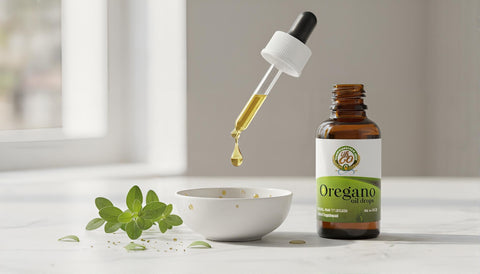
What is oregano oil?
Oregano oil is a natural product made from different oregano species. It is known for its intense aroma and for containing natural compounds such as carvacrol and thymol.
However, not all products called "oregano oil" are the same. Their composition, concentration, and method of use can vary considerably depending on the plant used and the manufacturing method.
In this guide, we explain in a simple way what oregano oil is, how it is obtained, what its main components are, how to identify a quality product, and what precautions should be considered.
What exactly is oregano oil?
The term "oregano oil" can mainly refer to two types of products:
Oregano essential oil
It is a concentrated oil containing the plant's natural aromatic compounds. It is generally obtained by steam distillation.
It is characterized by:
- Strong and pungent aroma.
- High concentration of natural compounds.
- Need to be used appropriately due to its intensity.
- Greater sensitivity to light, oxygen, and heat.
Diluted or macerated oregano oil
There are also products in which oregano or its essential oil is combined with a carrier oil, such as olive, coconut, or sunflower oil.
These products usually have a lower concentration and may be easier to use depending on their formulation.
For this reason, it is important to always check the ingredient list and the concentration indicated on the label.
There is not just one type of oregano
When we talk about oregano, we can be referring to different species of plants.
One of the best known is:
Origanum vulgare
It is a species widely used in the Mediterranean region and can present different concentrations of carvacrol, thymol, and other aromatic compounds.
Lippia graveolens
Commonly known as Mexican oregano, it is a species primarily used in America and is characterized by an intense and spicy aroma.
Even within the same species, the composition can vary.
Factors such as:
- climate,
- soil,
- altitude,
- harvest time,
- drying,
- storage
can modify the final chemical profile of the plant and the oil obtained.
Main components of oregano oil
Among the best-known compounds of oregano essential oil are carvacrol and thymol.
Carvacrol
Carvacrol is one of the main natural compounds present in many oregano oils.
It is responsible for a good part of its characteristic aroma and the intensity that distinguishes this type of oil.
Thymol
Thymol is another natural compound that can be found in different concentrations depending on the oregano species and its origin.
In addition to these components, the oil may contain other natural substances such as:
- p-cymene,
- gamma-terpinene,
- and different aromatic terpenes.
The combination of all these components forms the particular chemical profile of each oil.
How is oregano oil obtained?
There are different manufacturing methods.
Steam distillation
It is one of the most widely used methods to produce essential oil.
During the process, steam passes through the plant material and carries the aromatic compounds. Afterward, the steam cools, and the essential oil separates from the water.
The result is a highly concentrated product.
CO₂ Extraction
Carbon dioxide extraction uses controlled pressure and temperature to obtain certain plant components.
This process can produce a different profile than traditional distillation and typically requires specialized equipment.
Oil Maceration
In this method, the plant is kept for a certain time within a carrier oil to transfer some of its components.
The result is generally milder and should not be confused with a concentrated essential oil.
Commercial Presentations
Oregano oil can be found in different presentations.
Among the most common are:
- drops,
- capsules,
- softgels,
- sprays,
- topical oils,
- ointments.
Each presentation has a different formulation and concentration.
For example, some liquid products contain essential oil previously diluted in olive oil or another carrier oil.
Capsules or softgels allow for more uniform quantities and largely avoid the intense characteristic flavor and aroma of the oil.
Does a higher concentration mean higher quality?
Not necessarily.
A high concentration can produce a more intense product, but it can also increase the possibility of irritation or intolerance if not used correctly.
Furthermore, the quality of oregano oil does not depend solely on the percentage of carvacrol.
Factors such as the following should also be considered:
- plant origin,
- botanical species,
- extraction method,
- freshness,
- storage,
- traceability,
- complete product composition.
The percentage of carvacrol is useful information, but it should be analyzed as part of a set of characteristics.
Studied Properties of Oregano Oil
Oregano oil and some of its components have been studied for their chemical and biological properties.
Antimicrobial Activity
Various laboratory studies have evaluated the activity of compounds such as carvacrol against certain microorganisms.
It is important to note that many of these studies are conducted under controlled laboratory conditions.
Laboratory results should not be automatically interpreted as a medical treatment for individuals.
Antioxidant Activity
Some components present in oregano have also demonstrated antioxidant capacity in different experimental tests.
The term "antioxidant" describes a chemical property and does not mean that the product can prevent or treat diseases.
Research on Inflammatory Processes
There are also investigations that analyze some components of oregano in relation to different biochemical processes related to inflammation.
However, the interpretation of these studies must be done carefully and within the context of the available research.
Important: This content is for educational and informational purposes and does not replace the advice of a doctor or health professional.
Traditional and Current Uses
Oregano has been used for generations both in food and in different traditional preparations.
However, it is important to differentiate the culinary use of the plant from the use of a concentrated essential oil.
Culinary Use
Fresh or dried oregano used as a seasoning contains much lower concentrations of its aromatic compounds.
For this reason, it should not be directly compared with an essential oil.
Aromatherapy
Oregano essential oil can also be used in products for aromatherapy or ambient diffusion.
Due to its strong aroma, small amounts are usually used in well-ventilated spaces.
Cosmetic and topical products
It can also be found as an ingredient in:
- soaps,
- balms,
- body oils,
- massage products,
- cosmetic formulations.
In these cases, the concentration used is especially important.
Safety and precautions
Oregano essential oil is a concentrated product and should be used responsibly.
Skin irritation
One of the main precautions is potential irritation.
Applying oregano essential oil directly to the skin without proper formulation can cause:
- burning,
- redness,
- sensitivity,
- irritation.
Products for topical use typically use a controlled concentration or a carrier oil.
People who should exercise greater caution
It is recommended to consult a healthcare professional before using concentrated oregano oil products in situations such as:
- pregnancy,
- lactation,
- children,
- people taking medication,
- people with medical conditions,
- people with sensitivity to essential oils.
Just because a product is natural does not mean it can be used without caution.
How to identify quality oregano oil
Several elements can help assess the quality and transparency of a product.
Clear label information
A reliable product should clearly indicate information such as:
- ingredients,
- product quantity,
- manufacturer or distributor,
- lot number,
- instructions for use,
- corresponding warnings.
When possible, it is also useful to know the botanical species and the origin of the raw material.
GC-MS analysis
GC-MS analysis—gas chromatography-mass spectrometry—allows identification of many of the components present in an essential oil.
This analysis can help determine the chemical profile of a batch and verify the presence of components such as carvacrol and thymol.
It is not the only indicator of quality, but it can be an important tool for control and transparency.
Carvacrol percentage
Some manufacturers indicate the carvacrol percentage of their product.
This data can help the consumer better understand the oil's concentration and characteristics.
However, a high percentage of carvacrol should not be considered a guarantee of quality on its own.
Signs to check before buying
Before choosing a product, it is advisable to check for clear information on:
- ingredients,
- concentration,
- origin,
- lot,
- manufacturer,
- method of preparation when available,
- instructions for use,
- storage recommendations.
It is also advisable to be cautious with products that make exaggerated claims or promise to cure, treat, or prevent diseases.
Clear and responsible information is a good sign of transparency.
Storage of oregano oil
Light, heat, and oxygen can gradually affect the natural components of essential oils.
To help preserve the product:
- keep the bottle tightly closed;
- store it in a cool place;
- avoid direct sunlight exposure;
- avoid excessive temperatures;
- keep the dropper or applicator clean.
Dark or amber glass bottles help reduce light exposure.
Aroma and natural characteristics
Oregano essential oil typically has a:
- herbal,
- intense,
- spicy,
- warm,
- slightly phenolic aroma.
The aroma can vary depending on the oregano species, the cultivation location, the harvest time, and the extraction method.
Significant changes in smell, especially rancid or unpleasant aromas, may indicate deterioration or oxidation.
Regulation and responsible communication
Products containing oregano oil can be marketed under different categories depending on their formulation and the market where they are sold.
For example, they may exist as:
- supplements,
- cosmetic products,
- essential oils,
- aromatherapy products.
Each category may have different labeling and communication requirements.
For this reason, responsible manufacturers should avoid claims that present these products as treatments or cures for diseases when the corresponding authorization does not exist.
Frequently Asked Questions
Is oregano oil the same as oregano used for cooking?
No.
Oregano used in cooking typically consists of fresh or dried leaves.
Essential oil is a much more concentrated product that contains a high amount of the plant's aromatic components.
Are all oregano oils the same?
No.
There can be significant differences in:
- oregano species,
- origin,
- concentration,
- carvacrol percentage,
- extraction method,
- carrier oil,
- presentation.
That's why it's important to read the label before comparing products.
What does the carvacrol percentage mean?
It indicates approximately what proportion of the analyzed profile corresponds to carvacrol.
It is an important characteristic of the oil, but it should not be used as the sole criterion for determining its quality.
Can essential oil be applied directly to the skin?
Due to its concentration, oregano essential oil can cause irritation if applied directly.
Topical products should be used according to their formulation and instructions.
Conclusion
Oregano oil is a product made from aromatic plants that can be found in different concentrations and presentations.
To truly understand what product we are buying, it is important to review three main aspects:
the plant of origin, the manufacturing method, and the concentration.
It is also advisable to pay attention to the manufacturer's transparency, label information, traceability, and storage conditions.
Rather than simply looking for the "strongest" product, the important thing is to choose a product that is correctly formulated, clearly identified, and suitable for the intended use.
A good decision begins with clear information.
Explore our options
Discover our different presentations of oregano oil and review the information for each product before choosing the option that best suits your needs.